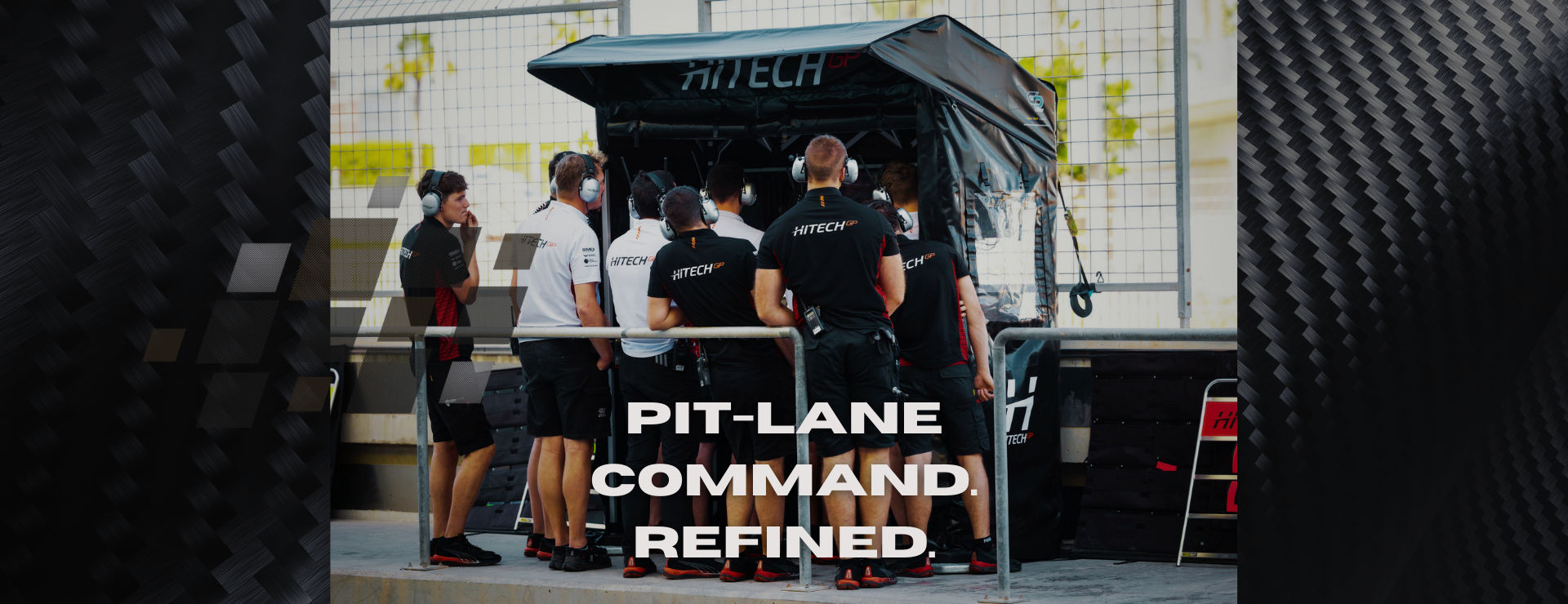

Compact Pit Lane Command Structures
Pit lane command perches are not new.
Across many motorsport formulae, teams have long used fixed pit wall structures to house data analysis, communication equipment and race control during live sessions.
These systems work, but they also come with trade-offs.
The real pit lane problem
Traditional pit lane command structures are typically built from rigid bars, beams, panels and custom-fabricated components. Once installed, they provide a solid working environment, but they also introduce challenges that many teams now struggle with.
Common issues include:
-
Heavy components that require multiple people to handle
-
Bulky structures that consume valuable trailer space
-
Long setup and breakdown times between sessions
-
Limited flexibility when layouts or regulations change
-
Transport inefficiencies during packed race calendars
As race weekends become more compressed and logistics more demanding, these drawbacks become harder to ignore.
When solid becomes overbuilt
Many existing pit wall systems were designed at a time when:
-
Transport space was less constrained
-
Setups were semi-permanent
-
Teams could afford heavier, more complex infrastructure
Today, teams are operating with tighter trailers, faster turnarounds and more frequent movement between circuits.
In that environment, traditional pit perch structures often feel overbuilt for the job they’re doing.
They provide a command position, but at the cost of:
-
Excess weight
-
Excess volume
-
Excess setup effort
The problem isn’t that pit lane command shelters don’t exist.
The problem is that many of them are harder to live with than they need to be.
What teams actually need now
Modern teams don’t need to reinvent the pit wall.
They need a command structure that delivers the same functionality, with fewer compromises.
That means:
-
A lighter structure that can be handled easily
-
A compact format that fits into already overloaded race trailers
-
Faster deployment between sessions
-
Reliable protection for people and equipment
-
A fixed, organised command position that still feels professional
In short: the function of a traditional pit perch, without the logistical penalty.
A different approach to pit lane structures
Rather than starting with heavy steel frameworks and rigid panels, some teams are now adopting a different approach.
By borrowing proven concepts from pop-up structures and combining them with heavy-duty PVC materials used in marquees and commercial awnings, it’s possible to create pit lane command shelters that are:
-
Strong
-
Functional
-
Weather-resistant
-
Significantly easier to transport and deploy
This approach retains the core purpose of a pit perch while dramatically reducing complexity.
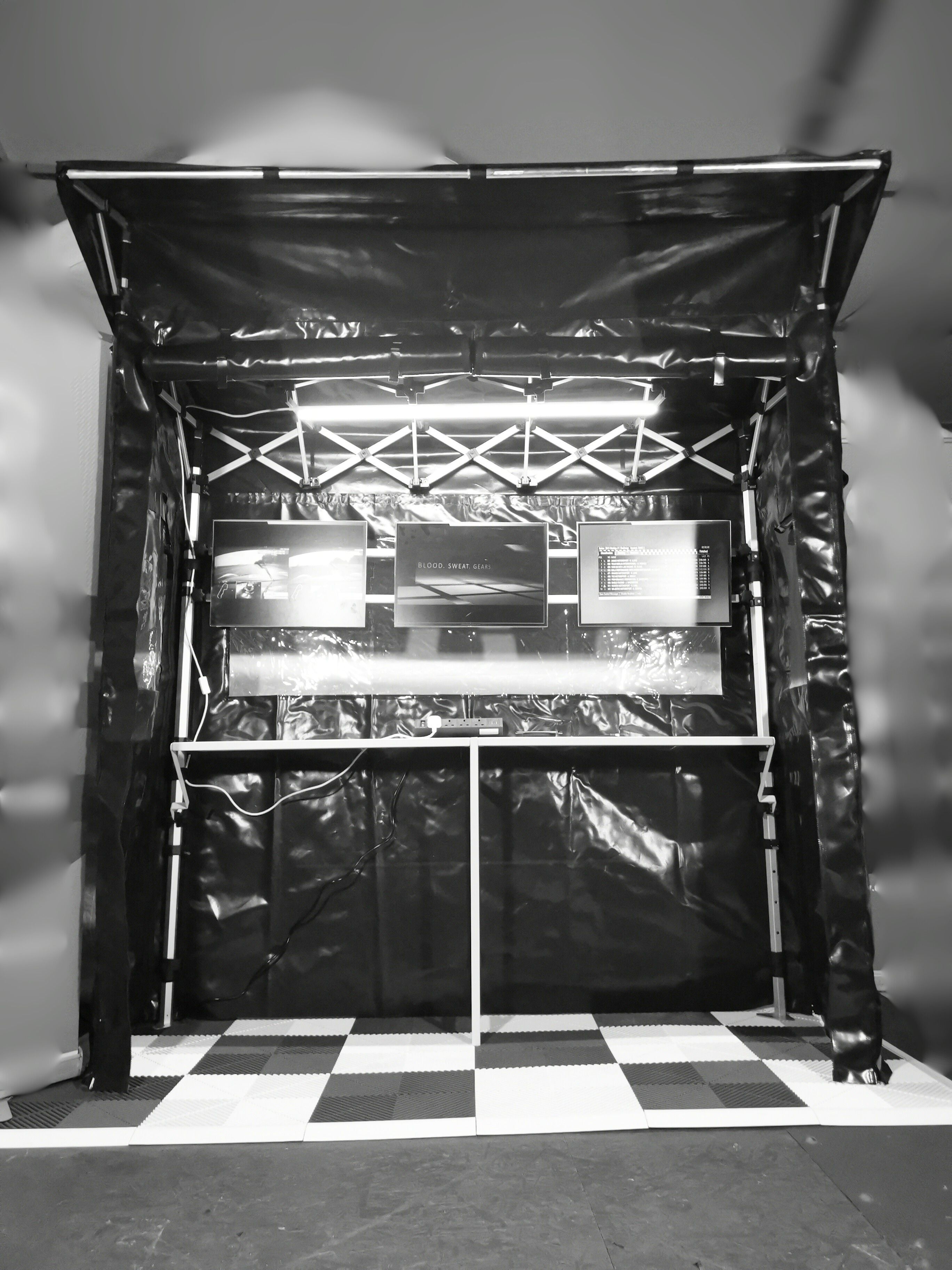
Using pop-up framework principles and robust PVC construction, it delivers a compact, easily transportable pit lane command structure designed for modern race operations. It provides teams with a functional command centre on the pit wall, without the weight, bulk and setup demands of traditional bar-and-panel systems. The Pit Perch doesn’t replace the concept of a pit lane command perch. It refines it. By borrowing proven concepts from pop-up structures and combining them with heavy-duty PVC materials used in marquees and commercial awnings, it’s possible to create pit lane command shelters that are:
- Strong
- Functional
- Weather-resistant
- Significantly easier to transport and deploy
This approach retains the core purpose of a pit perch while dramatically reducing complexity.